Staff Writer- Evangelyn Hill
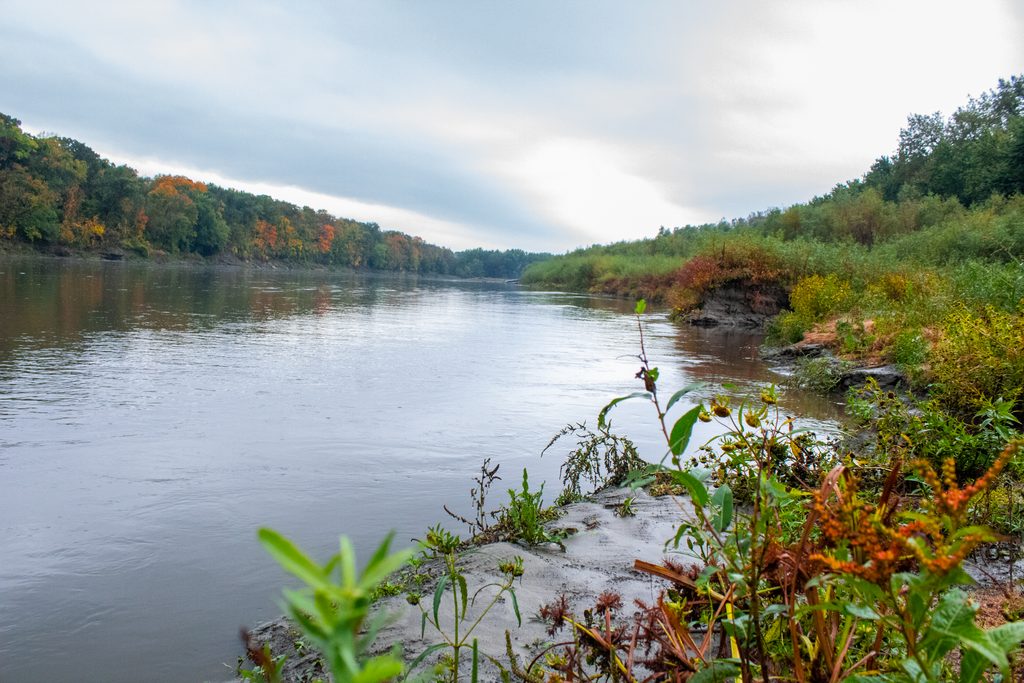
Photo credits: Anyah Moffett
Next week, Gustavus will once again welcome scholars from across the nation to our campus for the 62nd annual Nobel Conference. As the only event authorized by the Nobel foundation to use the name, the Nobel Conference dives deep into a new topic each year with an interdisciplinary angle.
This year, the Conference will dig into the Mississippi River. Scholars, scientists and historians will give talks about the Mississippi (and rivers in general). The conference will take place October 6th and 7th and is free and open to the public, and Gustavus students are encouraged to attend. For those off-campus, the Conference is live streamed through the Gustavus website.
Laura Triplett, Gustavus Professor of Environment, Geography & Earth Sciences and the Chair of the Nobel Conference this year, is excited about the Nobel topic.
“This is the first time that the Nobel Conference has been about a place. And at first I thought, oh that’ll be easy, it’s a small thing, not the universe or the ocean or something. But it turns out that the Mississippi… encompasses an enormous watershed. It encompasses land, water, animals, fish, so many different cultures and communities of people. That means music, that means storytelling, that means art and travel, it means escape, freedom, or non-freedom. So what we really hope the audience gets is a new perspective on an old waterway,” Triplett said.
The Conference experience is about more than just the science. Triplett explained that there will be a dance performance, student-created art, and even a song by a Gustavus faculty member that blends piano music with loon calls. In other words, according to Triplett, “You got to be here.”
Two of the off-campus speakers attending (Kelly Applegate and Nick Estes) are enrolled members of Native American tribes, and will bring an Indigenous perspective to their talks. Applegate will be discussing Indigenous ways of land management, and Estes will talk about the history of conquest in the Mississippi River valley and its impact on the events of today.
Senior Grace LaTourelle is one of the student liaisons for Dr. Estes and is most excited to hear his keynote address.
“I’ve read his book Our History is the Future which discusses the Dakota Access Pipeline and the Standing Rock #NoDAPL movement. Dr. Estes’ talk will look at the history of colonialism and militarization in the Mississippi river in the Mni Sota Makoce land as well as indigenous resistance and justice… Environmental injustice runs deep in its ties to rivers and water justice and I am excited to hear Dr. Estes discuss this,” LaTourelle said.
LaTourelle also appreciates the smaller breakout sessions that will take place in the afternoon. “The cool thing about the Nobel Conference is apart from the lectures, there’s breakout sessions and talks where you get to know the speaker’s research and work even more deeply. It also gives you a chance to engage more directly with the speakers. I’ve always really valued that aspect of the conference,” LaTourelle said.
A unique aspect of this year’s conference are the many additional events that will take place.
Senior Frances Lindgren works for the Events and Conference Services Department and will be working behind-the-scenes during the Conference.
“On the Tuesday of the Conference, there will be a book signing, the Seven Mile Experience trip to a local park, and a movie night with snacks! Then, on Wednesday, there will be a Mississippi River Action Expo to connect nonprofits, vendors, authors, and filmmakers to the students and audience members,” Lindgren explained.
Lindgren is particularly looking forward to the panel discussions, where several scholars discuss and debate questions from the moderator and the audience.
“I love how they all bring different perspectives and then find connections with each other or disagree respectfully,” Lindgren said. “There is much to learn from them working together.”
Triplett’s first Nobel Conference experience was quite impactful.
“The first time I participated in a Nobel Conference, when I was pretty new at Gustavus, and then it was over, I thought to myself ‘that might have been the highlight of my entire career that just passed and now it’s over’… and [now] thankfully I’ve been involved in many,” Triplett said.