Editor in Chief- Grace LaTourelle
Soren Sackreiter
The Instagram algorithm captured me in more ways than one this past year, but not all of them were bad. In fact, around November, I started receiving reels that have informed the way I now interact with media. And now, I am repeating this call to action to our faithful readership, in hopes of inspiring a year of more intentionality. Of course, I am referencing the return to physical media: 2026 is the year we go analog once again.
Like for many, Spotify Wrapped day is a highly anticipated event for me, which in hindsight, is rather silly; I am perfectly aware of what bands I enjoy and which songs were the soundtrack of my year. However, just before the release date, I started to see these reels, compelling me to ditch the music streaming app (amongst other conveniences) and dust off my old CDs. I am unsure whether this physical media campaign is a yearly objective or what sparked it, but for me, who was influenced nearly immediately, it was as a result of the couple of Spotify controversies.
According to an article from The Guardian published in September, the founder of Spotify, Daniel Ek, invested 600 million Euros into Helsing. Helsing, as described on their website, “is a new type of defence company,” that produces “AI-enabled precision mass and autonomous systems across all domains.” According to the article from The Guardian, as a result of this, many bands are leaving the platform, including Massive Attack, who, at this time, also joined the No Music For Genocide initiative.
Spotify has also come under fire recently for playing ICE recruitment ads. According to an article by Independent, the ads compelled listeners to “join the mission to protect America” by becoming an ICE agent. The article also highlighted that these ads are not just reaching Spotify, but HBO Max, Hulu, ESPN, and Pandora as well. A Spotify spokesperson reminded that the ads do not violate Spotify’s advertising policies, but many users have expressed their disappointment and disgust with Spotify’s tolerance for continuing to run the ads.
Due to these current issues, as well as the ongoing controversy revolving around unfair payout models, which are detrimental for smaller artists, many past and present Spotify users are calling to leave the platform in favor of Apple Music or other streaming services. However, another subsect is growing, encouraging the movement to more physical music options such as CDs, records, and MP3 players.
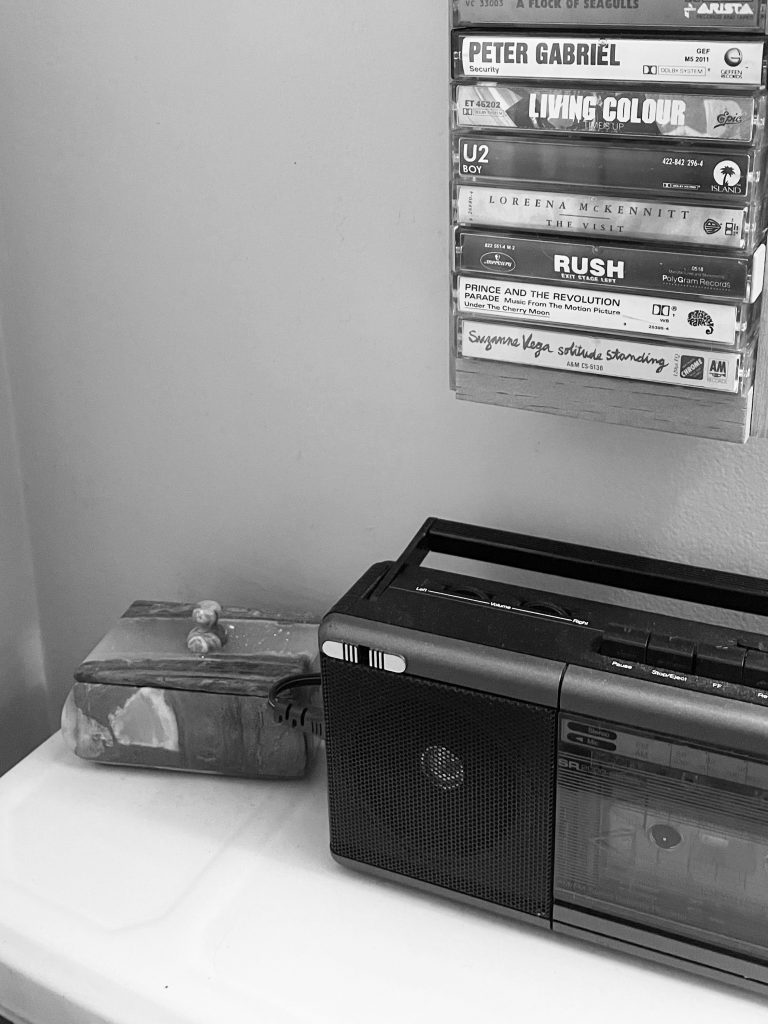
So, I have followed suit. For Christmas, I received my first MP3 player, which was a fun and creative experience to set up and download all of my many, many playlists to. I reraided my Dad’s old CD, record, and cassette collection over break and filled in the gaps with a trip to Down in the Valley, a record store in Maple Grove, MN. While I no longer have the convenience of pulling up any new or forgotten song in a matter of seconds, I have been able to reconnect with my childhood, listening to my worn ABBA and Simon and Garfunkel CDs that I sang along to every day on the drive to school. That, and consuming music in a way that feels more in line with my values, has made it worth it to me. Plus, as a massive 80s rock fan, it is exciting to get to experience the music I love in the way that people did when the albums were first released.
However, music is not the only way to transition back to physical media this year. Libraries are an incredible, and often underutilized, resource that I think we need to bring our attention back to. I am a proud owner of library cards both in my home county, but also at the St. Peter library. Not only do they have physical books, but libraries also have a plethora of e-books, audiobooks, online resources, newspapers, CDs, and movies, all for free. Even if you won’t use your library card, I implore you to sign up for one, especially in St. Peter, because it’s an action that supports your local community.
Purchasing, renting, or borrowing DVDs is another great way to engage with the physical media initiative. Many thrift stores have whole collections of movies and TV shows collecting dust on their shelves in an era where DVD players are obsolete. This transition is also beneficial as movie and show streaming service subscriptions have become increasingly expensive and limited in what they provide.
Finally, as an article being published in the Gustavian Weekly, I can’t not mention the return to print newspapers. Being informed is incredibly important on all levels: local, national, and global. Newspapers not only serve as a source of current information but also as a connection to your community and a way to engage with nuanced ideas and opinions. Physical crosswords or word searches, are arguably more cool to play than the New York Time’s online minigames, however drastically harder to get away with during a lecture.
All in all, I’ve begun my journey, and I suggest you do as well. In the past couple of weeks, I have felt more creative and ingrained in society. I’ve done far less scrolling, not having the opportunity to swipe from the Spotify app to Instagram, without being totally conscious of what I’m doing. I’ve swapped scrolling on Reels for reading, and even if I still spend hours in one position on the couch, it feels better.
But the fun and connection to the past aside, the real benefit of an analog year is in its intentionality. As a consumer, you are making intentional decisions about what companies you want to support. In the modern era, companies are so intertwined that a cup of coffee from one shop is support for something you might not agree with.
Furthermore, it’s intentionality with your dollar, but also with your time. Convenience has its grip on every facet of our lives: food, education, clothing, and media. Leaving the platform, I had 86 playlists on Spotify. Opening the app and hitting shuffle is a convenience. But maybe taking the time to choose an album, plugging in my record player, and carefully placing the needle is okay. Maybe those minutes, as opposed to seconds, are not a waste of my time, but a chance to take a breath and recenter.
Of course, these switches could arguably be overconsumption. My crates of records and CDs take up more physical space than an app on my phone does. I suppose it’s about what space you’re willing to give up: the corner of your room or a piece of your values and the peace of your mind.
Unfortunately, with the society we live in, consumption comes with hidden costs. I wrote an article Fall Semester about the Coca-Cola funding Gustavus receives and how I don’t believe it reflects our values as an institution, but I also recognized that every person deserves comfort and to enjoy products that they like. I don’t use Spotify, and I don’t eat meat, because those things don’t reflect my values, but I still sometimes go to Target or purchase fast fashion clothing; I’m not perfect, but I’m trying to make changes.
I suggest you try it. Somewhere, in some aspect of your life this year, make a transition. Fight for what you value, be more intentional with your decisions and time, and situate yourself in your community. Happy 2026, Gusties.