Staff Writer- Evangelyn Hill
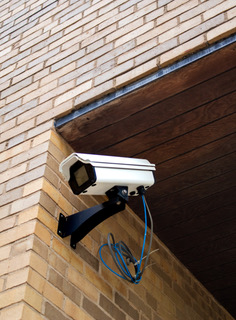
Photo credits: Anyah Moffett
One of today’s most controversial issues concerns the ubiquitous traffic cameras across the United States: Flock cameras. Flock’s system has become so controversial that people are removing or sabotaging these cameras.
What is Flock? How does it impact our state and city? And how are cameras and surveillance being used on our own campus?
According to the Winona Post, Flock is a network of ALPR (automatic license plate reader) cameras that “send alerts when they spot the license plate of a stolen vehicle, a revoked driver, or a missing person, for example.”
Flock operates a national database of information from their cameras across the country, according to their website. Police departments can track vehicles across state lines based on license plate numbers or even just a description of the car.
Flock’s cameras have been met with mixed reactions. “Police say the cameras are extremely helpful in solving crimes,” the Winona Post states, “but some Americans oppose them over the potential for surveillance data to be shared with third-party companies or the federal government.”
Flock has enabled police departments to solve more crimes. Vero News of Indian River County, Florida, reports that the local police were able to track a murder suspect by using Flock to track the Uber rides and the Greyhound bus he took before fatally shooting his ex-girlfriend.
The article also says the cameras have helped in multiple local missing persons cases, including several cases involving people with Alzheimer’s. They cite Flock’s website as stating the cameras have helped find 10,000 missing people across the United States.
Flock’s website also suggests more potential uses, including in identifying people in danger during natural disasters and solving package thefts.
However, cases of misuse of Flock data are popping up across the country. The Chicago Tribune reported that a Michigan City officer resigned after misusing data from the cameras. They noted that this was the third incident of Flock data misuse in just over one week (the city overhauled its Flock use policy in response to these incidents). An officer in Deer Park, Texas, was suspended for ten days after searching the Flock database for an unauthorized purpose, according to ABC13 Houston.
Concerns about surveillance and misuse have resonated deeply with many Americans, some of whom have sabotaged Flock cameras in their area. For example, Winona, Minnesota saw all eight of its Flock cameras taken down in a twenty-four hour period, according to the Winona Post.
Democrats and Republicans alike have expressed concern about the use of Flock cameras, according to NPR. Josh Shapiro, the Democratic governor of Pennsylvania, said Flock cameras were “not in the public interest.” The Republican governor of Florida, Ron DeSantis, announced he plans to remove ALPR cameras from highways, stating he wanted to avoid “a surveillance state.”
Ethical use of Flock cameras is an issue in the upcoming Mankato mayoral election. The Mankato Free Press sent a question on surveillance cameras to several candidates, and Julia Hamman responded by explicitly stating she is opposed to Flock: “These systems are facing significant scrutiny in communities across the nation due to their invasive nature as mass surveillance tools. Community members should have a protected right to privacy.” She also expressed concerns about instances of ICE using Flock to track immigrants despite not having a warrant.
Worries about Flock have prompted the creation of DeFlock, a crowdsourced map that shows locations of Flock cameras (and other ALPR cameras). DeFlock can create alternative driving routes that avoid Flock cameras.
DeFlock users have identified Flock cameras in the vicinity of Gustavus. There are several in Mankato near River Hills Mall. There is also a Flock camera at the Kasota Police Station and Community Center.
There are also non-Flock ALPR cameras, including in the Mankato Fleet Farm parking lot and at the Kasota city park.
DeFlock also labels one camera on Gustavus property. I spoke to Scott Reiten, the Director of Risk Management and Campus Safety, to clear up any misconceptions about this camera and the others at Gustavus.
Some students on YikYak were speculating over the summer that the new Gustavus cameras were Flock cameras. However, the one Gustavus camera marked on DeFlock is not a Flock camera, according to Reiten. The majority of campus cameras are white, and this particular camera is black (like Flock’s cameras), which may be why it is labeled on DeFlock.
However, this camera is part of Gustavus’s own system of safety cameras. They are from Ubiquity, not Flock.
Several of the Gustavus cameras are ALPRs, like Flock cameras. These cameras are only posted at the entrances to campus.
Gustavus cameras have a key difference from Flock cameras: “All of their data is stored locally, here on campus,” Reiten explained. “It does not leave, it does not go to a database system, none of that.”
The new camera additions to campus are simply updated versions of the former security cameras.
“Our system was getting outdated,” Reiten said. The new cameras have “Better technology as far as lasting longer [goes]… the newer cameras are more sturdy for the winter.”
Reiten also stressed that the cameras exist solely for safety. They would not be very useful for catching a thief, for example.
Campus Safety is looking to the future for more safety camera updates.
“The more tech that comes out, the more you can do – in a good way,” Reiten said. A future update may include cameras that are able to recognize guns.
Reiten emphasized the safety and privacy of the Gustavus camera system. All Gustavus cameras are within their own closed system and do not have facial recognition.
Data would only be used outside of Gustavus for extreme cases. “Lawyers can request a camera… if something happened on campus, they can request footage of it, if we have it. But that has to go through the courts. We don’t just hand over video,” Reiten said.
Another aspect of privacy that the Gustavus system takes into account is residence halls, where cameras are not used. “We definitely stay out of the private areas with cameras,” Reiten said. “That’s our policy, no matter what.”
Gustavus students seem satisfied with the safety of our campus. Junior Claire Bronson said, “I feel very safe and that it’s unlike other campuses, where I can walk alone and not feel unsafe.” Sophomore Daniela Trapero agreed: “I feel like it’s a great safety area. I feel as safe as I would feel at home.”